Solo Travel in 2026: Why Americans Are Ready to Go It Alone
eDreams' latest study reveals how independence, personal growth and thoughtful preparation are shaping the way Americans travel alone

Why solo travel feels different in 2026
For many Americans, a solo trip offers something a group itinerary rarely allows: full control over the schedule. Our latest study finds this freedom is the single biggest driver of solo travel among Americans, particularly for the ability to set one's own pace.
The appeal goes beyond convenience. While unavailable friends or family are a common starting point for traveling alone, many respondents describe the experience as a chance to try something new or get to know themselves better away from familiar routines.
According to our study, this sense of autonomy shapes how people experience a trip. Small, self-directed decisions such as what to eat, when to move on, and whether to strike up a conversation build into what respondents describe as a stronger sense of independence and a clearer perspective by the end of the trip.
44%
of American travelers say solo travel builds their self-sufficiency
43%
associate going alone with improved mental clarity
41%
want the freedom to move at their own pace
35%
become more open to different cultures and ideas
Independence is becoming part of the itinerary
Independence plays out differently depending on who's traveling. 41% of Americans who participated in our latest study cited the freedom to set their own pace as a reason to travel solo, a preference slightly more common among men (44%) than women (38%). For some, this independence is a deliberate choice; for others, it's circumstantial: 38% say they travel alone simply because friends or family aren't available, a reason cited more often by Gen Z (44%) than by Millennials (36%). Either way, the appeal centers on the freedom to decide when to move on, when to linger, and when to change course without coordinating with a group.
That same independence also opens the door to experimentation. 37% of Americans say they travel solo specifically to try something different, whether that's a style of accommodation, an activity, or a destination outside their usual pattern. According to our study, men (38%) are slightly more likely to cite this as a motivation than women (36%). Meeting new people factors in too: 34% say socializing is part of the appeal, often through planned activities or excursions like a food tour, a class, or a shared train journey rather than a planned group itinerary. For many, solo travel allows for connection without requiring it.
Solo travel motivations: US vs global travelers
US respondents showed stronger interest across several personal motivations than the global average.
| Motivation | US | Global |
|---|---|---|
| Friends or family are unavailable | 38% | 30% |
| Desire to experiment | 37% | 27% |
| Want to get to know themselves better | 36% | 27% |
| Wish to meet new people | 34% | 23% |
Younger adults value flexibility
Among Americans aged 25-34, 51% cite the freedom to move at their own pace as a reason to travel solo. This is the highest share of any age group in this eDreams study.
Mental clarity resonates most with younger generations
Across Gen Z and Millennials, 50% associate solo travel with improved mental clarity. This is more than any other age bracket surveyed.
Expectations shift with age
Among Americans aged 65 and older, 24% don't expect a solo trip to change their perspective. Among Millennials, just 3% feel the same.
How long Americans want a solo trip to last
Short, self-contained escapes dominate. Nearly half of US respondents put the ideal length at four to seven days, against 43% globally.
The four-to-seven-day window
47% of Americans name this as the ideal length, and the figure holds steady across generations, from 50% of Millennials to 40% of Baby Boomers.
Quick escapes fit the calendar
27% favor trips of one to three days. Gen Z leads at 32%, matched by women at 32% against 23% of men.
Extended trips stay rare
Only 4% of Americans want a solo trip longer than two weeks, and 14% choose eight to fourteen days, well behind France (25%) and Germany (24%).
How far Americans will go alone
43% would travel anywhere in the world, against a global average of 36%. No other market surveyed is as willing to cross a border alone.
Men are notably more likely than women to consider going anywhere, at 47% against 39%. The continental figure is where the US separates most clearly from the rest of the study: Americans tend to either stay home or cross an ocean, with little appetite for the middle distance.
How Americans get around on a solo trip
Distance and geography push US travelers toward planes and cars, leaving rail well behind the European picture.
Air travel
72% of Americans choose to fly, twelve points above the global average of 60%. It peaks with Gen Z (79%) and Millennials (77%).
The solo road trip
53% would drive, rising to 58% in the Southeast. Men are more drawn to driving alone than women, at 56% against 49%.
Rail
36% would take the train, against 46% in Spain, 45% in Portugal and 44% in the UK. Interest rises to 40% among West and Northeast coast residents.
Turning uncertainty into readiness
Preparation is where solo travel differs most clearly from group travel. With no one else to confirm a booking, check a transfer time or remember an important item, that responsibility falls to a single traveler. The study finds planning is a top priority for 28% of Americans overall, and the most frequently cited essential among 18-24 and 25-34 year olds (34%). This points to a preference among younger travelers for a dependable framework before departure: offline maps, GPS tools, tickets booked in advance and apps for key activities. This groundwork doesn't require accounting for every hour of a trip. Rather, the data suggests Americans prioritize structure around a few key activities, arrival, accommodation and transportation, while leaving room for spontaneity elsewhere.
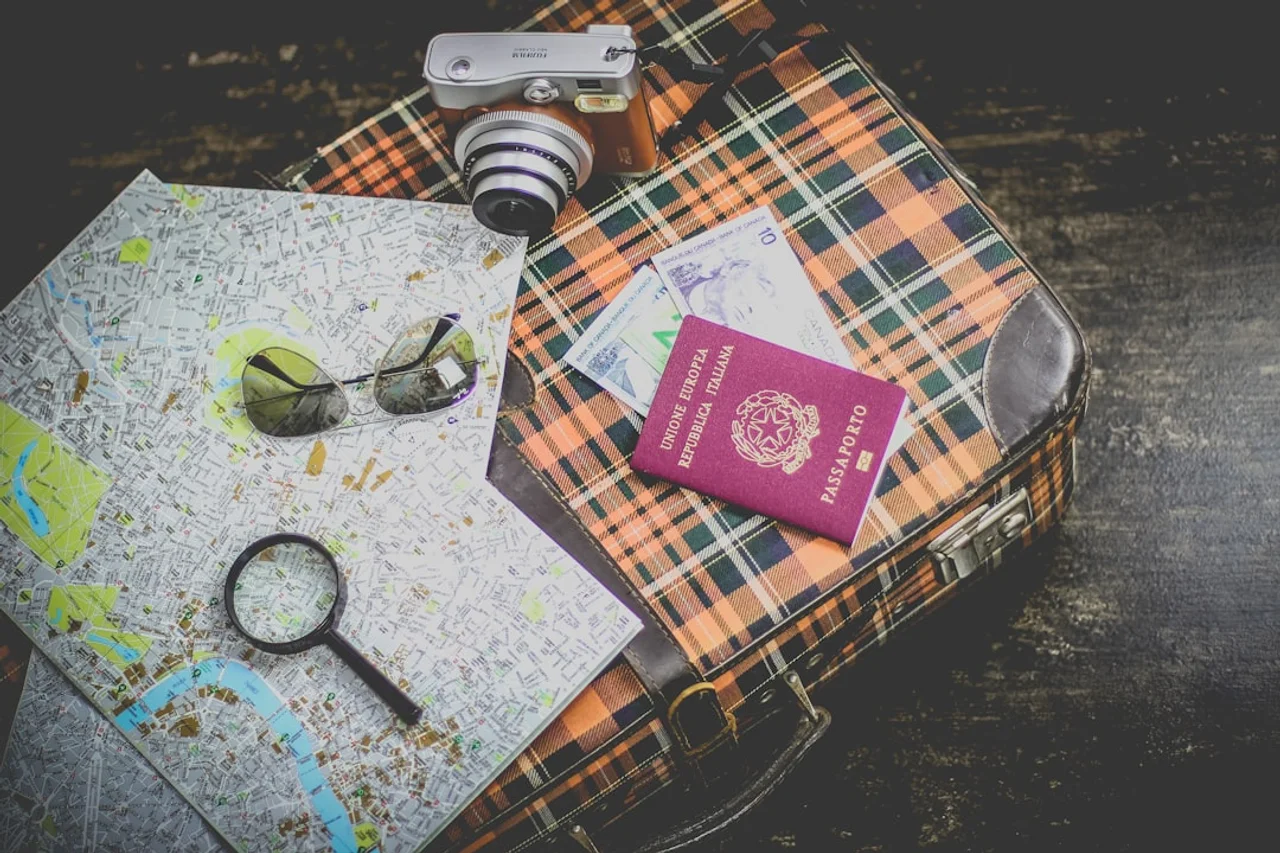
What Americans prioritize before traveling alone
Our survey identifies safety, planning and comfort as core considerations ahead of any solo trip.
Safety
For 37% of American travelers, essentials such as emergency contacts, a first-aid kit and secure storage for money take priority.
Planning
For 28%, maps, GPS tools, advance tickets and activity apps help them arrive with a dependable framework for the trip.
Comfort
For 26% of US respondents, suitable clothes, reliable shoes, snacks and a travel pillow make unfamiliar routes and long transit days easier.
What US travelers bring home from a journey alone
Our findings suggest, for many Americans, the value of solo travel extends beyond independence itself. Respondents to our study frequently described outcomes such as greater self-sufficiency, improved mental clarity and a broader openness to different cultures, indicating that the benefits of traveling alone are seen as much in personal terms as practical ones.
These effects appear to vary across generations, with younger respondents somewhat more likely to associate solo travel with a shift in perspective than older ones. Overall, the study points to solo travel as something increasingly associated with personal development as much as logistical freedom, encompassing confidence, self-understanding and a broader outlook, rather than simply the ability to travel unaccompanied.
Frequently Asked Questions
Solo travel gives them greater control over their pace and more time for self-discovery, the chance to experiment, and opportunities to meet people outside their usual circles.
Nearly half (47%) say four to seven days, and 27% prefer one to three. Trips longer than two weeks appeal to just 4%, a much smaller share than in France or Germany.
Flying leads at 72%, well above the global average of 60%. Driving follows at 53%, and rail trails at 36%, roughly ten points below Spain, Portugal and the UK.
Many US travelers begin by deciding on a manageable destination, planning their arrival in advance, making sure they have important information to hand and leaving flexible time once the practical details are settled.
Once transportation, accommodation and important reservations have been decided, it's worth leaving open periods for rest, exploration and spontaneous changes.
They can join walking tours, classes, shared excursions or social meals when they want company, before returning to their own schedule whenever they prefer.
Our study was based on a global survey of 9,000 adults, including 2,000 US respondents. It examined their motivations, priorities and expectations around traveling alone.
Ready to plan your next solo trip?
Find flights that give you the freedom to choose your own destination, dates and pace.
Search Our Flights